Hoop Rolling
Introduction
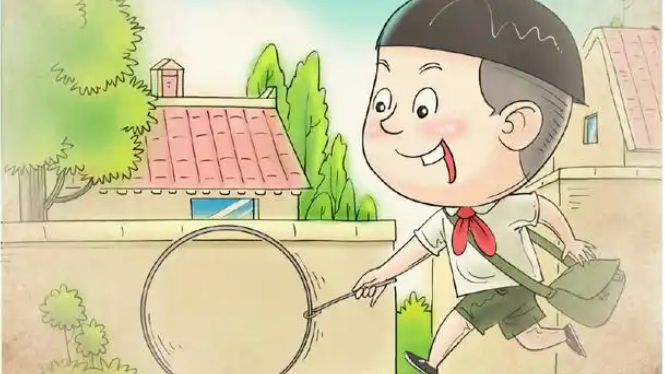
Hoop rolling, a traditional game enjoyed by children across various cultures, involves rolling a hoop along the ground using a long stick or handle. The primary objective of the game is to keep the hoop upright and rolling smoothly over a given distance. This simple yet engaging activity requires minimal equipment – typically just a hoop made from an iron sheet and a long handle, often with a U-shaped hook at its end. Players skillfully maneuver the hoop using the handle, allowing them to run alongside it as it rolls forward. Hoop rolling not only provides entertainment but also helps in developing coordination and balance, making it a favorite pastime for children.
History
The origins of hoop rolling trace back to ancient times, with evidence suggesting its presence in various cultures around the world. The simplicity of the game and the easy availability of materials required for making the hoop made it a popular choice among children. In early societies, hoops were crafted from materials readily available in the environment, such as bent wood or metal. Over time, hoop rolling became a common recreational activity, passed down through generations. Its appeal transcended cultural boundaries, with each region potentially adding its own unique twist to the game. Historical records and artifacts have shown hoop rolling being played in ancient Greece and Rome, where it was not only a children's game but also an exercise for young athletes, emphasizing agility and endurance.
Cultural Significance
Hoop rolling holds cultural significance in many societies, often regarded as a nostalgic pastime that connects individuals to their childhood memories. The game embodies a sense of simplicity and community, often played in open spaces or community gatherings. For many, hoop rolling is a symbol of carefree childhood days and is celebrated as part of cultural festivals and events. It also highlights the resourcefulness of past generations, who created engaging games using minimal resources. The game has also been used in educational contexts, teaching children about physics concepts such as momentum and friction in a fun and interactive way. In some cultures, it is associated with rites of passage, symbolizing the transition from childhood to adulthood, where mastering the skill of hoop rolling was seen as an achievement.
Techniques and Rules
Equipment
The equipment required for hoop rolling is straightforward, consisting primarily of a hoop and a handle. The hoop is typically made from a durable material such as an iron sheet, bent into a circular shape approximately the size of a barrel. This simple construction ensures that the hoop can withstand the rigors of rolling across various terrains. The handle, often fashioned from a stick or bamboo whip, measures about a meter in length and features a U-shaped iron hook embedded at one end. This hook is crucial for controlling the hoop, allowing the player to guide and propel it forward as they run alongside.
Rolling Techniques
Mastering hoop rolling involves developing a set of techniques that enable the player to keep the hoop upright and moving continuously. The process begins with setting the hoop in motion by positioning it on the ground vertically and using the hook to propel it. Players must maintain a steady pace, synchronizing their steps with the motion of the hoop to prevent it from toppling over. Skilled players can perform various tricks, such as guiding the hoop in curved paths or increasing its speed without losing control. The key to success lies in balancing the forces acting on the hoop, using the handle to make minute adjustments as needed.
Scoring System
While hoop rolling is primarily a recreational activity, competitive variations of the game introduce a scoring system to determine the winner. In such competitions, players are typically judged based on their ability to keep the hoop rolling for the longest distance or duration without allowing it to topple. Obstacles may be introduced to increase the difficulty, requiring players to navigate their hoops through designated courses or around barriers. The scoring system encourages participants to refine their techniques and strive for precision and control, highlighting the skill involved in what might appear as a simple activity.








